
Connecticut Helical
Contractors, Engineers & Architects

Helical Pile Systems for Contractors, Engineers & Architects
Connecticut Helical partners with general contractors, structural engineers, and architects on projects that require engineered foundation data, accurate installation records, and responsive field coordination.
Below is an overview of the steel and connection hardware we install and the applications for which each component is typically specified. Full product specifications, load tables, and system documentation are available upon request.
A Technical Foundation Partner From Preconstruction Through Closeout
A helical pile system is only as useful as the information supporting it. Shaft type, helix configuration, bracket selection, pile spacing, installation criteria, and required capacity must all align with the structural design and site conditions.
Connecticut Helical works with project teams to review foundation requirements, coordinate installation details, identify access considerations, and document the completed work. We install according to the approved plans and specifications rather than making unsupported field assumptions.
Our role may include:
- Reviewing foundation drawings and pile layouts
- Coordinating with the structural engineer and general contractor
- Confirming required design loads and installation criteria
- Supplying available product data and load tables
- Identifying site-access and equipment requirements
- Installing piles according to the approved design
- Monitoring and recording installation torque
- Providing final pile installation records
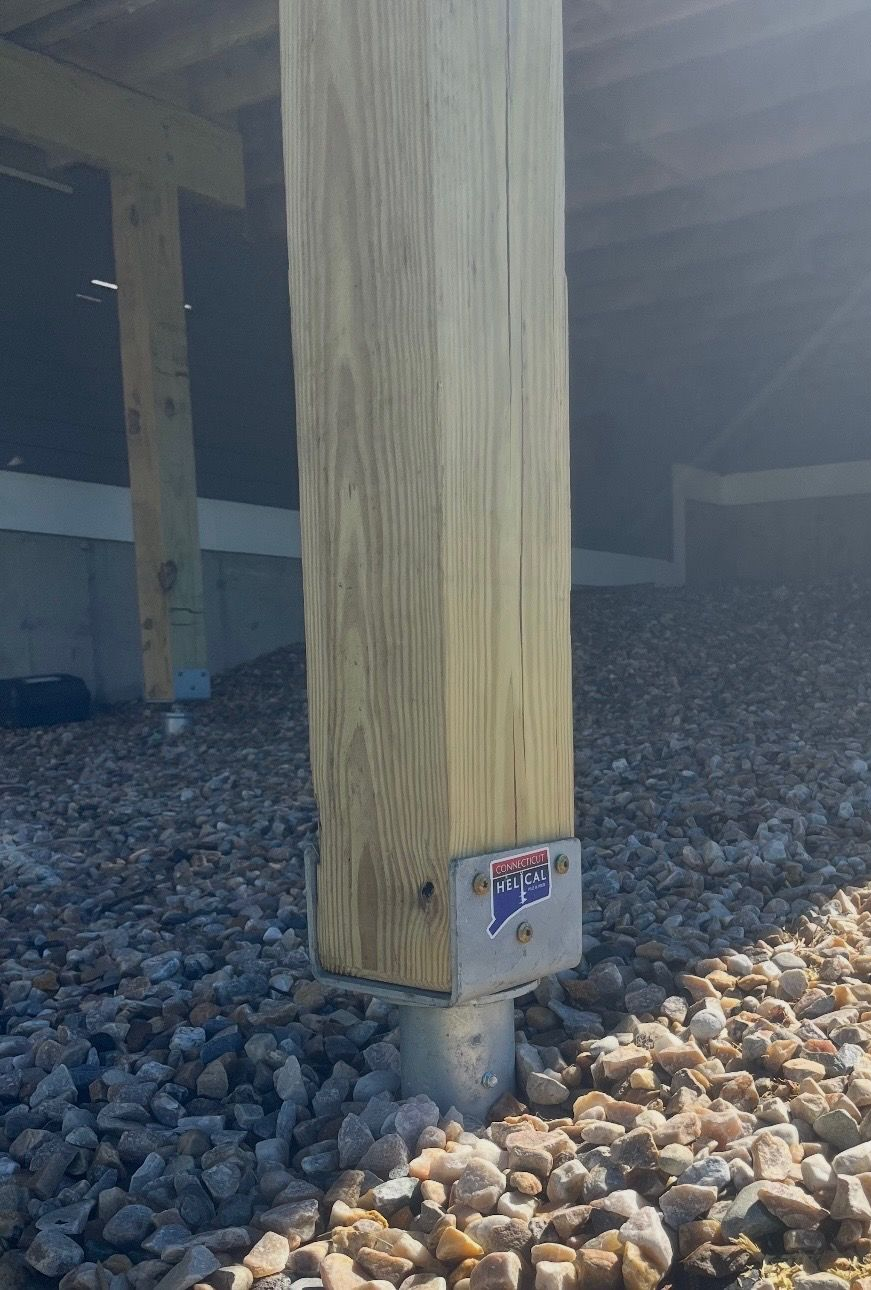

Helical Pile Steel
The pile shaft and helix configuration are selected based on the structure’s design loads, soil conditions, corrosion requirements, and approved foundation plan.
Square-Shaft and Round-Shaft Piles
Helical piles are available with solid square-shaft or hollow round-shaft steel configurations. The appropriate shaft type and size depend on the project’s compression, tension, lateral, and buckling requirements, as well as the conditions identified in the available geotechnical information.
Individual shaft sections are advanced into the soil and extended until each pile reaches the installation depth, torque, or bearing criteria specified by the engineer.
Round-shaft piles may be selected where additional resistance to buckling or lateral loading is required. Square-shaft systems may be appropriate for tension applications and projects where the surrounding soil provides sufficient lateral confinement. Final selection must follow the engineered design and manufacturer data.
Helix Plate Configurations
Steel helix plates are welded to the lead section of the pile and transfer structural loads into the surrounding soil. Depending on the design, a pile may use a single-, double-, or triple-helix configuration.
Helix quantity, diameter, spacing, and placement are selected according to the soil profile and required pile capacity. Larger or additional helices may provide more bearing area in weaker soils, but the final configuration must account for soil-layer interaction, installation torque, and the approved system design.
Galvanized Steel Components
The pile shafts and helix plates installed by Connecticut Helical use a hot-dip galvanized finish for below-grade corrosion resistance. Coating requirements and expected service conditions should be confirmed against the applicable product documentation and project specifications.
Manufacturer information regarding steel properties, coating thickness, section dimensions, and allowable capacities is available for submittal review upon request.
Brackets and Connection Hardware
The pile-to-structure connection is selected according to the supported load, structural material, finished elevation, and project details. All brackets must be compatible with the pile system and installed according to the engineered connection requirements.
New-Construction Post Caps
Post caps connect a helical pile to a structural post, column, or post-and-beam framing system. They are commonly used for:
- New decks
- Porches
- Pergolas and pavilions
- Elevated walkways
- Pool houses
- Garages and accessory structures
- Other post-supported construction
The connection detail should identify the post material, required hardware, pile position, finished elevation, and uplift or lateral requirements.
Ledger and Beam Brackets
Ledger and beam brackets connect a pile-supported foundation to a structural beam, ledger, or existing building component. These brackets may be used for additions, retrofits, and other projects where new foundation support must integrate with an existing structure.
Connection requirements vary according to the framing orientation, supported loads, edge distances, material condition, and accessibility. Final bracket selection must follow the approved structural detail.
Underpinning Brackets
Underpinning brackets connect helical piles beneath an existing footing or foundation wall. They transfer structural loads away from unstable surface soils and into competent bearing material below.
These brackets are primarily used for:
- Settling residential foundations
- Commercial foundation stabilization
- Sinking additions or attached garages
- Foundation walls experiencing differential settlement
- Existing footings requiring additional support
- Structural remediation and controlled lifting
Underpinning brackets are installed according to the structural engineer’s remediation plan. See our Foundation Stabilization & Underpinning page for more information about this application.
Adjustable Brackets
Adjustable brackets provide a controlled range of elevation adjustment between the installed pile and supported structure. They can help accommodate sloped sites, uneven terrain, varying pile termination elevations, and field conditions that require precise final alignment.
Where the approved bracket design permits, additional adjustment may be available to accommodate the angle or orientation of the connection. Adjustment ranges and allowable capacities must be confirmed using the actual bracket specifications.
Installation Data and Project Documentation
Field documentation provides the engineer and project team with a record of how the pile system was installed. Connecticut Helical monitors installation torque and records relevant information at each pile location.
Depending on the project requirements, closeout documentation may include:
- Pile identification and location
- Shaft and lead-section information
- Helix configuration
- Installed pile depth
- Number of extensions
- Final installation torque
- Bracket or connection type
- Field observations
- Deviations from the planned installation
- Additional testing information when specified
Installation torque is evaluated using the approved pile system’s torque-to-capacity relationship and the criteria established by the project engineer. Torque records do not replace engineering review, but they provide project-specific field data that supports verification of the completed installation.
Project Coordination Process
1. Submit the Project Information
Send the available structural drawings, design loads, geotechnical information, project address, construction schedule, and relevant foundation details.
If the plans are still in development, Connecticut Helical can review the proposed application and identify the information needed to define the installation scope.
2. Review the Pile Requirements
The project team confirms the pile layout, required capacities, shaft type, helix configuration, connection details, installation criteria, and documentation requirements.
Potential access restrictions, underground utilities, overhead clearances, interior work areas, and equipment staging needs should be identified during this stage.
3. Finalize Submittals and Scheduling
Available product data, load tables, bracket information, and other required documents are provided for review. Installation is then coordinated with the general contractor and other affected trades.
4. Install and Monitor
Piles are installed at the approved locations and advanced to the required depth, torque, or bearing criteria. Installation information is recorded at each location, and field conditions that differ from the plans are communicated to the appropriate project contact.
5. Deliver Closeout Documentation
After installation, the required pile records are organized and supplied to the project team. These records can be reviewed by the structural engineer, building official, or other designated party as required by the project.
Applications for Engineered Helical Pile Systems
Connecticut Helical installs helical pile systems for residential, commercial, and specialty construction, including:
- Residential additions
- Decks, porches, and elevated structures
- Accessory dwelling units
- Modular and prefabricated homes
- Garages and barns
- Pergolas, pavilions, and pool houses
- Commercial foundations
- Solar structures
- Carports and canopies
- Foundation stabilization and underpinning
- Retrofitted structural support
- Other compression, tension, and lateral-load applications
Each application requires project-specific review. Similar-looking structures may require different pile or bracket systems based on their loads, framing, soil conditions, and exposure.
What to Send for a Project Review
Providing complete information early helps reduce questions during submittal review and field installation. When available, send:
- Project address and site contact
- Architectural and structural drawings
- Foundation plans and connection details
- Compression, tension, and lateral design loads
- Geotechnical report or available soil information
- Required pile locations and spacing
- Finished elevations
- Corrosion or coating requirements
- Site-access and equipment restrictions
- Utility information
- Construction schedule
- Submittal and closeout requirements
If information is missing, send the documents you currently have and identify the project’s design stage.
Frequently Asked Questions
Do you provide pile specifications and load tables?
Yes. Available manufacturer product data, load tables, bracket information, and related system documentation can be supplied upon request. Required documents should be identified before installation so they can be incorporated into the project review process.
How is the correct shaft type selected?
Shaft selection depends on the project’s structural loads, soil conditions, unsupported length, lateral requirements, corrosion exposure, and approved design. Square-shaft and round-shaft systems have different structural characteristics, so final selection should be made using project-specific engineering and manufacturer data.
How is pile capacity verified during installation?
Installation torque is monitored and documented as each pile is advanced. The measured torque is evaluated using the approved system’s torque-to-capacity relationship and the installation criteria established by the structural engineer.
Can you install a pile system already specified by our engineer?
Provide the plans, specifications, product requirements, and load criteria for review. Connecticut Helical can confirm whether the specified system and hardware align with its available products and installation capabilities.
Do you coordinate with structural engineers?
Yes. Connecticut Helical works from the engineer’s approved pile layout, capacities, connection details, and installation criteria. Questions or unexpected field conditions are communicated to the appropriate project contact rather than resolved through unapproved substitutions.
Can helical piles be used for both new construction and existing structures?
Yes. New-construction piles can support posts, beams, foundation systems, and prefabricated structures. Existing foundations can be stabilized using engineered underpinning piles and brackets.
Can piles be installed on limited-access sites?
Often, yes. Equipment access, working clearances, overhead restrictions, utilities, pile locations, and required torque must be reviewed before installation. Interior basement and crawlspace installations may also be possible when the equipment and structural details allow.
What documentation is provided after installation?
Documentation is based on the project requirements and may include pile locations, shaft information, installed depths, final torque readings, bracket types, and relevant field observations. Confirm the required closeout format before work begins.
Bring Us Into the Project Early
Early coordination makes it easier to resolve pile selection, connection details, access limitations, submittal requirements, and scheduling before they affect construction.
Send Connecticut Helical your drawings, design loads, available soil information, and project schedule. We will review the scope, identify the information needed for installation, and coordinate the next step with your project team.
Get a Free Quote
Explore Other Use Cases
ABOUT US
There are plenty of helical pile installers in Connecticut,
So Why Choose Connecticut Helical?

Local & Trusted
Serving Connecticut homeowners and contractors with personal service.

PDF Reports Included
Every project comes with accurate documentation for engineers and inspectors.

Cost-Effective
Save on labor and material compared to traditional footings.

Faster & Easier
No waiting on concrete cures, no heavy excavation.
Trusted by Homeowners & Contractors
See what homeowners and contractors across Connecticut are saying about our helical pile installations.
